Converting a tired wood-burning hearth into a reliable heat source used to mean tearing out chimneys and dealing with soot-stained masonry. Natural gas fireplace inserts change that math, sliding into an existing opening and delivering adjustable warmth with the press of a button. The picks below cover full ventless systems, vented log sets, electric alternatives, and a few decorative add-ons worth knowing about for seasonal styling.
The Leading Options At A Glance

Duluth Forge Dual Fuel Ventless Gas Fireplace Insert with Mantel (Apple Spice)

PuraFlame Klaus Electric Fireplace Insert (Black)

Stanbroil 10 Inch Metal Skull Fire Pit Decor

Stanbroil Fire Pit Demon Skull Gas Log

RealFyre Peterson 18-Inch Oak Log Set with G45 Vented Burner

Bluegrass Living Vent Free Dual Fuel Gas Log Set (18-Inch Birch)

Duluth Forge Dual Fuel Ventless Gas Fireplace Insert (FDI32R)
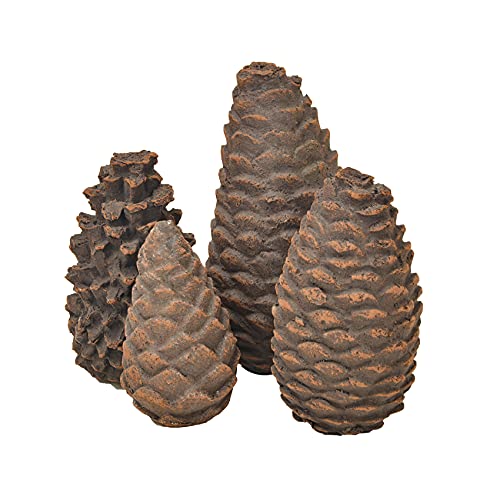
Stanbroil Set of 4 Decorative Ceramic Pine Cones
Taking A Closer Look At The Options
The Duluth Forge DFS-400R-2AS bundles the mantel, surround, and a 32,000 BTU ventless burner into a single package, which is unusual in this category. Most homeowners piece together a separate insert and cabinet, then spend an afternoon chasing color-matched trim. This unit skips that step entirely.
Because the system runs ventless (also called vent-free, meaning no chimney or external flue is required), it can sit in rooms where a traditional hearth would never work, like a basement bonus room or a converted den. The dual-fuel design accepts either natural gas or propane, so swapping later does not mean replacing the whole fireplace. Battery-assisted ignition and the included remote keep startup simple on cold mornings.
Bright Spots
- Mantel, surround, and burner ship together, eliminating a color-matching headache during renovation.
- Vent-free design opens placement options in rooms without an existing chimney or flue.
- Dual-fuel compatibility gives you a path to propane if natural gas is unavailable in your area.
- Remote-controlled operation removes the need to kneel down and strike a match for every use.
Things To Consider
- Apple Spice finish may not blend with every interior, so a swatch check against existing woodwork is worth the effort.
- Ventless appliances require adequate room ventilation, and some local codes restrict their use in bedrooms or tightly sealed homes.
Key Specs
Made For
Homeowners replacing a worn ventless unit who want a coordinated mantel-and-insert package without sourcing separate pieces.
Consider Something Else When
You already own a mantel you love; in that situation the bare Duluth Forge FDI32R insert gives you the same burner in a custom build.
The PuraFlame Klaus leans electric rather than gas, which is the whole point of including it here. Apartment dwellers, condo owners, and renters in buildings without a gas stub can still get the look of a fire without retrofitting a fuel line or fighting a landlord.
Three flame settings run with or without heat, so the unit pulls double duty as a year-round visual feature instead of a winter-only appliance. The 33-inch frame also fits a fairly standard hearth opening in many older homes, and the included crackling sound adds an audible layer that pure LED strips usually lack. For most living rooms, the dual 750W and 1500W modes offer a useful low and high heat range.
What It Does Well
- Plugs into a standard outlet, so installation is essentially zero compared to gas models.
- Flame effects operate independently from the heater, useful in shoulder seasons when ambiance matters more than warmth.
- Built-in crackling audio creates a more convincing fire than silent LED panels tend to deliver.
Points To Keep In Mind
- Heat output tops out lower than a true gas insert, so it warms a small zone rather than a large open floor plan.
- You will want to measure your existing opening carefully; the glass door frame is wider than some retrofit cutouts accommodate.
Best Suited To
Renters and apartment residents who want realistic flame visuals without any gas-line modifications or venting work.
Skip It When
You need serious zone heating for a drafty great room; the Duluth Forge DFS-400R-2AS delivers noticeably more BTU in that scenario.
This is the wildcard of the list, and not a functional heater. The Stanbroil metal skull is a decorative accent meant to sit among the logs of a working fire pit or gas fireplace during Halloween setups, the kind of prop that takes a plain hearth and turns it into a themed centerpiece for an October party.
Because it is constructed from metal with a fireproof finish, the piece handles direct flame contact without melting or releasing fumes, which is the safety floor you want before placing anything decorative inside a real fire. The 10-inch scale reads clearly from across a room without overwhelming a smaller mantel.
Features That Help
- Metal construction tolerates open flame and cools quickly after the fire dies down.
- 10-inch scale looks proportional in both indoor fireplaces and outdoor fire pits.
- Non-toxic finish keeps indoor air quality steady during long burn sessions.
Honest Caveats
- Strictly seasonal; it has no role in everyday heating and only earns its space for a few weeks each year.
- Realistic styling skews toward horror, so it clashes with traditional or farmhouse interiors outside of October.
Who Should Grab It
Hosts who run an annual Halloween gathering and want their working fireplace or fire pit to double as themed decor without compromising safety.
Look Elsewhere When
You want something visually striking year-round; the Stanbroil Demon Skull Gas Log brings the same flame-through-the-eye effect in a tighter, more reusable footprint.
Where the 10-inch metal skull from Stanbroil is a static accent, this Demon Skull model is a working gas log. Flames travel through openings in the eyes and mouth, turning a regular hearth into a glowing jack-o’-lantern effect during a Halloween burn.
The piece uses fireproof ceramic with a fireproof paint finish, so direct contact with flames will not degrade it over a typical season of use. At roughly 7 by 8.6 inches, it fits comfortably inside a standard log arrangement without crowding the burner. Owners commonly describe the look as more dramatic after a few minutes of burning, when the surface picks up char marks and the flame-through-eye effect intensifies.
Advantages To Know
- Openings in the eyes and mouth create flame effects that no static decor piece can match.
- Ceramic core resists thermal shock, useful for both wood fires and gas burners.
- Compact dimensions slot into most existing log arrangements without forcing a redesign.
Worth Bearing In Mind
- Highly themed, so it spends most of the year in storage rather than on display.
- Ceramic finish can discolor after repeated high-heat burns, which actually adds to the effect for many owners but surprises first-timers.
Right Fit For
Anyone who already runs a vented gas log set like the RealFyre Peterson and wants a swap-in accent for Halloween entertaining.
Another Choice May Suit
Families with younger children may find the 10-inch metal skull a less intense visual; both pieces offer similar build quality at different drama levels.
RealFyre’s hand-painted refractory ceramic logs (a high-density ceramic that holds heat like real charred wood) are about as close to the look of a true wood fire as gas gets. Each log is molded from real oak samples and reinforced with internal steel rods, so the set holds its shape through years of heating cycles rather than crumbling after a single season.
The included G45 dual-flame burner sits beneath a glowing silica sand bed (fine quartz granules that diffuse flame and dampen burner noise), which muffles the hiss of gas flow that cheaper vented burners tend to produce. The system requires a working chimney or flue, since vented log sets route combustion gases outside. For homeowners restoring a traditional masonry hearth, that tradeoff is usually welcome.
What Earns Its Place
- Hand-painted detail captures bark texture and charred ends that molded-plastic logs cannot replicate.
- Steel-rod reinforcement keeps the logs structurally sound through repeated heating cycles.
- Silica sand over the burner softens flame noise and widens flame distribution across the log set.
Trade-Offs To Consider
- Match-light ignition means striking a pilot before each use; an upgrade to electronic ignition adds cost but adds convenience.
- Requires a functional chimney or flue, so it does not retrofit into homes without existing venting.
Key Specs
Built With In Mind
Owners of a working masonry fireplace who want gas convenience without giving up the depth and crackle-free ambiance of a traditional log fire.
Swap It Out When
Your home lacks a chimney; the Bluegrass Living Vent Free Dual Fuel set handles the same role in ventless installations.
The Bluegrass Living B18DR-UL3 brings real flexibility to a ventless setup. Because the same burner accepts either natural gas or liquid propane, you can move it between homes or adapt if your fuel source changes, a problem that locks many shoppers into a single-fuel appliance for life.
The set ships with ten hand-painted birch logs, an iron grate, and a U-burner chassis (a U-shaped gas tube that produces a wide, low flame across the entire log bed) for more even flame patterns. A 30,000 BTU rating combined with 99.9 percent burner efficiency means the unit pulls close to all usable heat into the room rather than losing a portion up a flue. The remote toggles between manual and thermostat modes for set-and-forget comfort.
A Few Highlights
- Compatible with both natural gas and propane without burner swaps.
- Remote thermostat mode removes the need to manually adjust the flame during overnight burns.
- Ten-piece birch log arrangement fills an 18-inch hearth with realistic proportions.
Some Limits To Know
- Vent-free operation generates water vapor as a combustion byproduct, so adequate room ventilation matters for indoor air quality.
- Some municipalities restrict ventless appliances in bedrooms; check local code before installing.
Quick Facts
Whose Shelf It Belongs On
Homeowners without a working chimney who want the highest-efficiency heating option in this roundup and the freedom to switch between gas and propane later.
Reach For A Different Pick When
You already have a functional flue and prefer real-flame realism; the RealFyre Peterson Vented Oak Set pulls combustion outside for a more authentic fire presentation.
The Duluth Forge FDI32R is the bare insert behind the DFS-400R-2AS package reviewed earlier, sold on its own for homeowners who already own a mantel or want to recess the unit directly into a framed wall. Zero-clearance approval (a safety certification that lets the unit be enclosed in combustible framing without fire-rated spacing) means you can build a custom surround without leaving fire-rated air gaps around the box.
The 32,000 BTU dual-fuel burner handles the same heating load as the bundled version, and remote operation comes standard. The trade-off shows up in transport: hazardous-materials shipping rules apply, so delivery timing and return options are less flexible than the standard parcel logistics that cover the bundled mantel model.
Everyday Wins
- Zero-clearance framing lets you build a flush wall installation without fire-rated gaps.
- Dual-fuel burner future-proofs the install against fuel-supply changes.
- 32,000 BTU output matches the larger mantel version for consistent heating performance.
Where It May Fall Short
- Sold as a non-returnable hazardous-materials item, so order accuracy and pre-measurement matter more than with typical parcel freight.
- Requires carpentry skills or a contractor for a finished look, since no mantel or surround is included.
Feature Snapshot
Perfect Match For
DIY builders and renovators constructing a custom wall-mounted fireplace where a stock mantel would interrupt the room’s design.
A Better Fit Elsewhere
If you would rather skip the carpentry, the DFS-400R-2AS bundles the same burner with a finished mantel for a ready-to-install setup.
Stanbroil’s four-piece pine cone set is a low-cost filler for an existing gas log arrangement, not a stand-alone heating product. Drop them into the gaps between full-size logs and the burner looks fuller, the way a real wood fire stacks smaller kindling and cones among the larger splits.
Made from ceramic fiber, the cones handle direct flame without crumbling or releasing ash. You may notice orange and red hot spots appearing under the cones during use, which mimics the natural look of burning sap pockets in real pine. Cleaning is straightforward: let them cool fully before lifting them out and brushing off any dust.
What Makes Sense
- Ceramic fiber construction tolerates direct flame without releasing ash into the room.
- Four graduated sizes fill awkward gaps between full-size logs in any existing arrangement.
- Low cost makes them an easy refresh for an aging log set that has lost pieces.
Details To Watch
- Strictly decorative; the cones add no measurable heat output to a fireplace.
- Pine cone styling reads as rustic or cabin-themed, which may clash with modern interiors.
Technical Highlights
Who Will Love This
Homeowners with an existing vented log set like the RealFyre Peterson who want to refresh the look without replacing the full system.
Not Your Match When
You want the cones to be the focal point; in that role, a full log set like the Bluegrass Living Birch delivers a more complete visual statement.
What To Weigh Before Choosing Natural Gas Fireplace Inserts
Vented vs. Ventless: The Core Fork
Vented log sets route combustion gases through an existing chimney or flue, producing a more authentic flame presentation and avoiding moisture buildup indoors. Ventless designs (also called vent-free) burn clean enough to skip external venting, but they release small amounts of water vapor and combustion byproducts into the room. Local building codes often restrict ventless units in bedrooms or tightly sealed homes, so check the rules in your municipality before committing.
BTU Output and Room Size
A 30,000 BTU ventless burner covers roughly 1,000 square feet in a moderately insulated home, while a 75,000 BTU vented burner pushes much harder but loses a portion of heat up the flue. Oversizing causes short cycling and dry indoor air; undersizing leaves you huddling near the hearth on cold nights. Measure your room dimensions and check insulation quality before chasing a higher BTU rating.
Dual-Fuel Flexibility
Burners that accept both natural gas and propane (called dual-fuel units) cost a little more upfront but eliminate the hassle of replacing the entire appliance if your fuel supply changes. Rural homes that may eventually switch to propane benefit most from this flexibility, while urban households on a stable natural gas line may not need it.
Realism and Long-Term Maintenance
Hand-painted refractory ceramic logs outlast basic ceramic sets, but they cost more and require gentle cleaning to preserve surface detail. Decorative accessories like ceramic pine cones refresh an aging arrangement for the cost of a takeout dinner, while metal accents like the Stanbroil skull pieces add seasonal character without affecting heat output at all.
Key Considerations Across These Picks
Common Shopping Slip Ups
Many shoppers focus on BTU numbers and ignore venting requirements, only to discover their home lacks the chimney a vented set demands. Others order a full mantel-and-insert bundle when they already own a perfectly good mantel, paying for a piece that ends up in the garage. Measure your opening, confirm your fuel type, and decide between vented and ventless before browsing listings to keep impulse purchases in check.
What The Higher Tier Buys
The jump from a basic ceramic log set to a hand-painted refractory set like the RealFyre Peterson brings better flame depth, internal steel reinforcement, and quieter burner operation under silica sand. Dual-fuel burners add flexibility for fuel-source changes. For most households, mid-tier models hit the practical sweet spot; premium tiers earn their place in restorations where authenticity matters as much as heat.
Frequently Asked Questions
Do natural gas fireplace inserts need a chimney?
Vented inserts require a working chimney or flue to route combustion gases outside. Ventless inserts do not need a chimney, but they do need adequate room ventilation and may be restricted in bedrooms by local code.
How many BTUs do I need for my room?
A rough rule of thumb is 30,000 BTU per 1,000 square feet in a moderately insulated space. Larger rooms, high ceilings, and older homes with drafty windows push that number higher.
Can I install a natural gas fireplace insert myself?
Most jurisdictions require a licensed professional to connect gas lines and verify combustion safety. You can often frame a zero-clearance unit yourself, but the gas hookup should be left to a certified installer.
What is the difference between vented and ventless gas logs?
Vented logs route exhaust through a chimney for more authentic flames, while ventless logs burn clean enough to skip external venting but release small amounts of water vapor indoors. Local codes often limit where each type can be installed.
How long do refractory ceramic logs last?
Quality refractory ceramic logs typically last a decade or more with regular use, though surface paint may slowly fade over time. Dropping or rough handling shortens lifespan far more than normal heating cycles do.
Closing Thoughts
A natural gas fireplace insert can turn a drafty, seldom-used hearth into the warmest seat in the house, but the right pick depends on whether your home already has venting, which fuel you plan to use, and how much realism matters to you. Walk through the venting question first, then match BTU output to your room size, and let the rest of the decision follow. The right insert should feel like it has always belonged in the room.