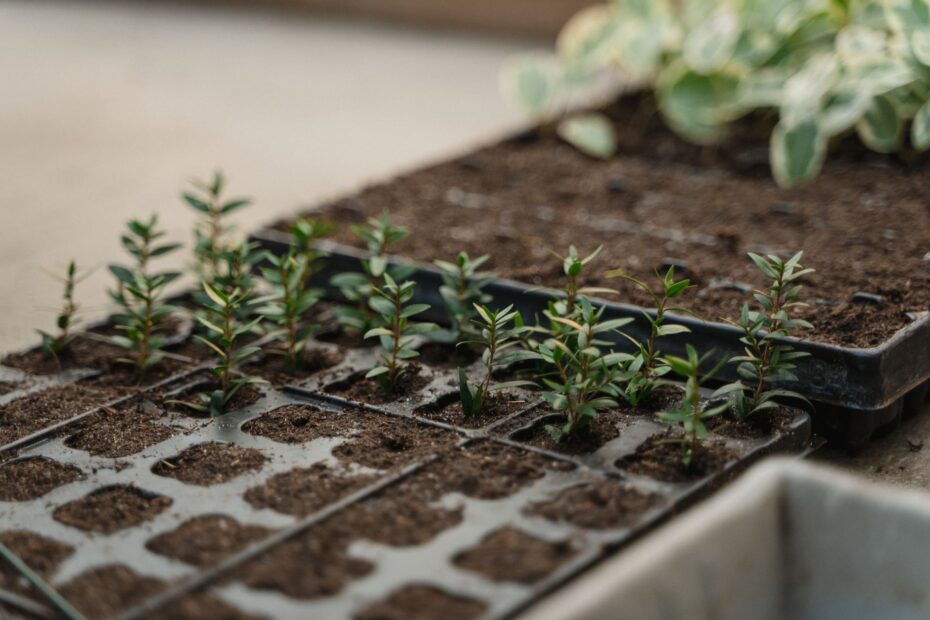
A single seed, stem cutting, or rooted division can grow into a complete new plant. A tomato seed contains an embryo, while a pothos stem can form roots at a node. You avoid wasted cuttings once you know which plant parts can form roots and shoots.
This explanation covers seed-based and vegetative methods for houseplants, garden beds, and woody shrubs. You will see how new growth starts, how roots form, and how to move rooted pieces into pots.
Two Routes Lead to New Plant Growth
New growth begins from either a seed or living tissue with the capacity to form fresh structures. Sexual propagation starts after pollen and ovule material join, while asexual propagation starts from a stem, leaf, root, crown, or another living plant part.
Seeds hold an embryo, stored food, and a protective coat. With moisture, oxygen, and suitable temperatures, the embryo sends out a root and then a shoot. Vegetative pieces skip the embryo stage because living cells near buds or wounds can form fresh roots and growth points.
| Path | Starting material | What forms the new plant |
|---|---|---|
| Seed-based propagation | Mature viable seed | An embryo germinates into roots and shoots |
| Vegetative propagation | Stem, leaf, root, crown, or branch | Living cells form new roots and growth buds |
| Grafting | Scion joined to rootstock | Joined vascular tissue feeds the scion |
That biological split shapes your next choice. Seeds bring genetic variation, while vegetative methods retain the traits that led you to want another plant from the parent.
Seeds and Vegetative Methods Give Different Results
Seeds produce a new genetic mix
A basil seedling can differ from its parents in leaf size, scent, color, vigor, and disease tolerance because seed formation mixes genetic material. You can use seeds for annual flowers, vegetables, breeding projects, and crops where variation adds value.
Viable seeds need moisture to wake the embryo, oxygen for respiration, and a suitable temperature range. Some seeds need light exposure, while others need a moist cold period called stratification before sprouting. Your packet directions matter because lettuce and lilac respond to different cues.
Vegetative pieces retain familiar traits
Stem cuttings, division, layering, and leaf cuttings produce plants with the same genetic traits as the parent in nearly all cases. A rooted mint cutting should retain the parent’s flavor and growth habit, which suits named houseplants and cherished perennials.
Grafting works differently because two plants share the finished specimen. The scion supplies stems, leaves, flowers, or fruit, while the rootstock influences root strength, size control, and soil tolerance. You see that division of labor in apples, roses, pears, and several fruit trees.
Growth Habit Points to the Suitable Method
The traits retained through vegetative growth only matter once the method fits the plant’s structure. You can sow zinnias and tomatoes, split a crowded hosta, pin down a flexible jasmine stem, or take stem cuttings from coleus because each plant presents a different route to new growth.
| Plant habit | Method that fits | Useful example |
|---|---|---|
| Annual flowers and vegetables | Seeds | Marigold, pepper, cucumber |
| Clumping perennial with several crowns | Division | Daylily, hosta, ornamental grass |
| Flexible branch near the ground | Layering | Blackberry, hydrangea, jasmine |
| Soft or semi-woody stem | Stem cutting | Pothos, coleus, rosemary |
| Compatible woody stock | Grafting | Apple or pear |
- Stem cuttings: Select a shoot with nodes because nodes hold buds and tissue capable of forming new roots.
- Leaf cuttings: Use whole leaves or leaf sections only for plants such as snake plant, begonia, and African violet.
- Root cuttings: Take dormant root pieces from plants such as horseradish, raspberry, and some poppies.
- Division: Separate crowns that already hold roots and shoots, leaving each piece able to grow alone.
- Layering: Root a stem while it remains attached, so the parent still supplies water during root formation.
Not every leaf can produce a new plant, and not every woody branch forms roots readily. Grafting suits compatible woody relatives because the cambium, the thin growth layer beneath bark, must meet closely before vascular tissues join.
That same need for active growth tissue makes node placement crucial when you propagate from cuttings.
Healthy Nodes Give Most Cuttings Their Starting Point
Nodes hold dormant growth tissue
The small joint where a leaf, bud, or side shoot emerges is a node. Plant nodes contain meristem tissue, cells able to divide into specialized structures. Under moist, airy conditions, that tissue can form adventitious roots, which arise from a stem rather than an existing root system.
Your cutting needs at least one viable node below the waterline or growing medium. An internode, the smooth stretch between nodes, can stay green for weeks yet lack the bud tissue that gives your cutting a dependable place for root formation.
Clean cuts reduce rot at the base
- Choose firm growth: Select disease-free tissue with two or three nodes and no insect damage.
- Clean your tools: Wipe blades with rubbing alcohol before moving to another plant to avoid carrying stem disease.
- Cut below a node: Make a clean cut about one-quarter inch below the lowest usable node.
- Remove lower leaves: Strip foliage that would sit underwater or rest against the damp medium.
- Set the base: Place the node in water or a damp, airy rooting medium.
Keep the upper leaves, but reduce a large leaf blade by half on thirsty cuttings. Less leaf area means less water loss before roots can supply moisture.
Rooting hormone is optional for pothos, philodendron, and coleus. For rosemary, hydrangea, and woody stems, auxins such as indole-3-butyric acid can signal cells near the cut to form roots. Use only a thin coating, since excess powder can cake around the stem.
Water and Soil Rooting Need Different Care
Water rooting makes root growth visible
A clear glass makes water propagation easy to watch, but visible roots do not always equal stronger roots. Keep one node submerged, hold leaves above the waterline, and replace cloudy water before it smells sour. Bright indirect light gives your cutting energy without scorching exposed leaves.
For how to root plant cuttings in water, start with a clean vessel and enough water to cover the node without submerging the whole stem. You can watch white roots emerge, which helps you judge timing, but water-grown roots need time to adjust after potting.
An airy medium suits roots headed for pots
A mix of potting medium and perlite gives the stem base moisture plus air pockets. Soil-rooted cuttings form roots suited to a pot from the start, though you cannot inspect them without disturbing the base. Your goal is dampness rather than a heavy, soaked mix.
Both methods rely on warm room temperatures, bright indirect light, clean tools, and moderate humidity. A plastic cover can hold moisture around tender foliage, yet stale trapped air feeds fungal growth. Leave a gap for air exchange and wipe condensation from the cover.
Rooting Time Changes With Species and Conditions
Root growth varies because plant tissue responds at different speeds. A pothos node can show roots in 7 to 21 days, while a hardwood cutting can sit for months before forming a stable root system. Temperature, stem maturity, light, and plant biology set the pace.
| Method | Common time range | Reliable progress sign |
|---|---|---|
| Fast houseplant stem cutting | 1 to 4 weeks | White roots or firm new leaves |
| Herb or softwood cutting | 2 to 8 weeks | Gentle resistance in medium |
| Woody cutting | 2 to 6 months | Rooted buds and anchored stem |
| Seed with cold dormancy | Several weeks to months | Radicle emerges from seed coat |
| Graft union | Several weeks | Scion stays green and buds open |
Firm green stems, swelling buds, visible roots, and gentle tug resistance give you useful clues. New leaves alone can mislead you because a cutting can spend stored sugars on a shoot before it has enough roots to live independently.
Check soil-rooted pieces with a light upward pull after several weeks rather than every day. Resistance suggests roots have gripped the medium. A loose stem needs more time, warmer conditions, or a base that is less waterlogged.
Established Roots Make Potting Safer
Root structure matters more than length
Several roots with side branches anchor a water-rooted cutting better than one long thread. You are ready to pot once roots are a few inches long, have started branching, and can spread in a small pot without sharp bends.
Choose a pot only slightly wider than the root mass and confirm that it has drainage holes. A huge container stays wet too long around a small root system, raising the chance of rot after potting.
Gentle aftercare limits transplant stress
- Use airy mix: Fill the pot with a mix suited to your plant, with perlite added for drainage where needed.
- Set roots loosely: Lower roots into a hole without folding them sharply against the pot bottom.
- Water gently: Moisten the mix until water drains, then empty the saucer beneath your pot.
- Hold steady light: Keep bright indirect light for 7 to 14 days before raising exposure.
- Pause fertilizer: Wait for active new growth before feeding because damaged roots cannot use fertilizer well.
Your newly potted plant benefits from moderate humidity during its first week, especially after water rooting. Gradual adjustment gives tender water-grown roots time to function in soil and can reduce leaf droop.
If droop persists despite that adjustment, the plant’s symptoms can help pinpoint what went wrong.
Propagation Problems Leave Visible Clues
Black, mushy tissue points to rot from stale water, a buried leaf, poor airflow, or a medium that stays saturated. Cut above the damaged area with a clean blade, discard the rotten portion, and restart in fresh water or a lighter mix.
| Symptom | Likely cause | Correction |
|---|---|---|
| Sour water or slime | Stagnant water and decaying leaves | Wash the vessel and change water |
| Algae on glass | Too much direct sun | Move to bright indirect light |
| Wilted leaves | Low humidity or excessive leaf area | Raise humidity and trim large leaves |
| No roots after weeks | Cold conditions or missing node | Warm the site and recut below a node |
| Seed fails to sprout | Old seed or missing dormancy cue | Check seed age, light needs, and cold treatment |
| Droop after potting | Roots adjusting to soil | Lower light and keep moisture even |
Fuzzy growth around a stem points to excess humidity with too little air movement. Remove the cover for part of each day, discard badly affected pieces, and avoid splashing leaves at every watering.
A limp cutting is not always dead. Inspect the stem base before discarding it. A firm pale base can recover with higher humidity, while a soft dark base needs a fresh cut.
Plant patents set a legal boundary for asexual reproduction. The Plant Patent Act can restrict reproduction of patented named cultivars, especially for commercial use. Check the plant tag and the United States Patent and Trademark Office database before multiplying a patented cultivar for sale.
Strong Results Start With the Right Match
Your strongest results come from matching the method to the plant and protecting the small root system that follows. Seeds need suitable germination cues, while cuttings need a viable node, oxygen, moisture, and patience. Start with healthy tissue, look for real root evidence, and move rooted pieces into a modest pot before soggy soil sets them back.
FAQ
How does propagating a plant work?
Propagating a plant works by starting new growth from a seed or living plant tissue. Seeds germinate from an embryo, while a stem, leaf, root, or divided crown can form roots and shoots from active cells. You select the method that fits your plant’s growth habit.
What is the difference between sexual and asexual plant propagation?
Sexual propagation mixes genetic material, so seedlings can differ in color, flavor, size, or vigor from the parent plant. Asexual propagation uses living plant tissue and produces a genetic copy in most cases. You can select seeds for variation and vegetative methods for familiar traits.
Why do cuttings grow roots in water or soil?
Cuttings grow roots because cells near a node or fresh wound can form adventitious roots under moist conditions. Water keeps the node hydrated, while an airy growing medium supplies moisture and oxygen. Your cutting still needs healthy tissue, suitable warmth, and bright indirect light.
What is a node, and why does it matter when taking a cutting?
A node is the joint where a leaf, bud, or side shoot emerges from a stem. It contains growth tissue that can form roots and new shoots. You should place at least one viable node below the waterline or growing medium for dependable rooting.
How long does it take for a cutting to grow roots?
Fast houseplant cuttings can root in 1 to 4 weeks, herbs can need 2 to 8 weeks, and woody stems can take several months. Your cutting responds faster in warm, bright indirect light with a clean, airy medium. Firm stems and branching roots show real progress.
How do you plant a cutting after water propagation?
To plant rooted cuttings, use a small pot with drainage and a lightly moist, airy mix. Wait for several roots with side branching, spread them gently in a planting hole, and water the mix. Keep indirect light and pause fertilizer until fresh growth appears.