A bean seed can go straight into its final bed, while a raised seedling moves there weeks later. Your choice affects germination, root growth, planting labor, weather exposure, and harvest timing, especially for carrots, tomatoes, beans, and peppers.
This guide compares timing, effort, and crop behavior so a backyard gardener can match planting methods to frost risk, soil warmth, and a well-prepared bed.
Garden Plants Begin in Two Distinct Ways
Seeds Grow in Their Final Location
A carrot seed placed in a loose row begins where its root will mature. Direct sowing, also called direct seeding, places seed in a bed, container, or row where the plant stays through harvest.
You skip trays, indoor lights, and moving day. Roots grow in outdoor soil without disturbance, which matters for crops with taproots or crops that react badly to handling.
Seedlings Move into Prepared Soil
A tomato in a cell tray has passed its fragile germination stage before reaching the garden. Transplanting means raising seedlings indoors or obtaining nursery starts, then moving them into permanent outdoor space.
Your seedlings receive steady warmth, moisture, light, and spacing during their small stage. That head start can move harvest forward, though outdoor planting adds labor and a short recovery period.
Both methods grow vegetables, but the starting conditions differ. Those early conditions shape your spending, labor, weather exposure, and crop timing through the rest of the growing season.
Speed, Cost, Labor, and Early Losses Shape the Trade-Off
A packet of bean seed can fill a long row with far less equipment than trays, growing medium, and indoor lights. Direct sowing needs little preparation beyond bed work, yet each sprout faces rain, cold, birds, insects, and nearby weeds.
| Factor | Direct sowing | Transplanting |
|---|---|---|
| Starting materials | Seed, labels, and prepared soil | Seedlings or seed, trays, medium, and light |
| Indoor space | No indoor space required | Needs bright space before planting |
| Labor at planting | Fast for broad rows and large beds | Slower because each plant needs placement |
| Water needs | Light watering during germination | Deep watering after planting, then steady moisture |
| Harvest timing | Begins after outdoor soil suits the crop | Can shorten outdoor time to harvest |
| Main early loss risk | Poor emergence, pests, weeds, and weather | Root damage, sun stress, and transplant shock |
For a large patch of peas, lettuce, or beans, direct seeding vs transplanting comes down to setup and exposure. You avoid transplant shock with seed in place, but shallow sprouts need more attention during their opening days.
Protected starts exchange more labor and materials for control. You can set light, moisture, temperature, and spacing before outdoor weather settles, which gives slow warm-season crops extra growing time.
Cold soil can stall seed germination and newly planted roots. Check soil warmth near planting depth instead of trusting a warm afternoon air temperature.
Frost Dates and Soil Temperature Set Planting Time
Frost Dates Mark the Outdoor Boundary
Outdoor soil and frost risk decide which crops can enter the garden. Cool-season crops such as peas, spinach, radishes, and lettuce grow in cool, workable soil, while tomatoes and peppers need frost-free conditions.
Your local last frost date matters more than a date printed on a seed packet. The Plant Hardiness Zone Map describes average winter cold, while local extension offices and nearby weather records give planting dates with more local detail.
Soil Warmth Changes Germination Speed
Bean and cucumber seeds can sit inactive in chilly ground despite bright spring sun. Warm-season seeds need warm soil for steady germination, while peas and lettuce tolerate much cooler conditions.
Days to maturity finish the timing calculation. A pepper listed at 75 days from transplant needs a protected start in a short growing season, while a 25-day radish has ample time from seed outdoors.
- Check frost history: Use your last frost date to avoid setting tender crops outside too soon.
- Probe the soil: Take a morning soil-temperature reading 2 inches deep before sowing warm-season seed.
- Read maturity days: Match packet timing to the frost-free days available in your area.
- Use cool windows: Sow peas, greens, and radishes in workable soil during cool spring or fall weather.
- Reserve indoor starts: Raise tomatoes, peppers, and eggplants before outdoor warmth arrives.
Season length sharpens the direct sow or transplant choice for tender fruiting crops. Once soil warms enough for a fast crop, outdoor seed can catch up quickly and may outgrow a stressed indoor start.
Whether it catches up depends partly on how well the crop’s roots tolerate disturbance.
Crop Root Structure Determines the Better Starting Method
Root shape gives you a useful clue before planting starts. Crops with a central taproot react poorly to lifting, while plants with fibrous roots recover well after careful moving.
| Crop | Preferred start | Reason for the choice |
|---|---|---|
| Carrots | Direct sow | Taproots can fork after disturbance. |
| Radishes | Direct sow | Fast growth leaves little reason to raise starts. |
| Beans | Direct sow | Roots dislike handling, and seeds sprout fast in warm soil. |
| Peas | Direct sow | Cool soil suits germination, and plants grow fast. |
| Beets | Direct sow | They grow reliably from seed, though tiny starts can move carefully. |
| Lettuce | Either method | Seeds sprout readily, and young plants tolerate moving. |
| Cucumbers | Direct sow or young transplant | Warm soil suits seed; very young starts limit root stress. |
| Squash | Direct sow or young transplant | Large seeds grow fast, but short seasons favor young starts. |
| Tomatoes and peppers | Transplant | Long maturity periods reward a protected start. |
| Brassicas | Transplant | Broccoli, cabbage, and kale handle moving well. |
| Flowers | Depends on species | Zinnias grow well from seed; petunias benefit from raised starts. |
| Rice | Either method | Direct-seeded rice suits warm, wet ground; starts aid short seasons. |
Beets need a clear answer because their seed clusters can complicate spacing. Your most dependable route is direct sowing followed by thinning, though seedlings under 2 inches tall can survive careful moving.
Tomatoes, peppers, broccoli, cabbage, lettuce, and many annual flowers tolerate transplanting well. Their roots branch after planting, so a gentle move causes less setback than it does for a carrot or bean.
Strong Germination Starts with Seedbed Preparation
Seedbed Detail Decides the Start
A fine, level surface gives tiny seeds close contact with moist soil. Stones, large clods, and fresh weed growth leave air gaps where seed dries out or seedlings lose access to light.
- Clear the bed: Remove weeds, stones, and chunky debris from the top inch of soil.
- Mark the row: Make a shallow furrow at the depth printed on the packet.
- Place the seed: Space seeds loosely, then cover them with fine soil.
- Firm the surface: Press gently so seed coats contact moist soil without compacting the row.
- Water with care: Use a soft spray that moistens the row without washing seed away.
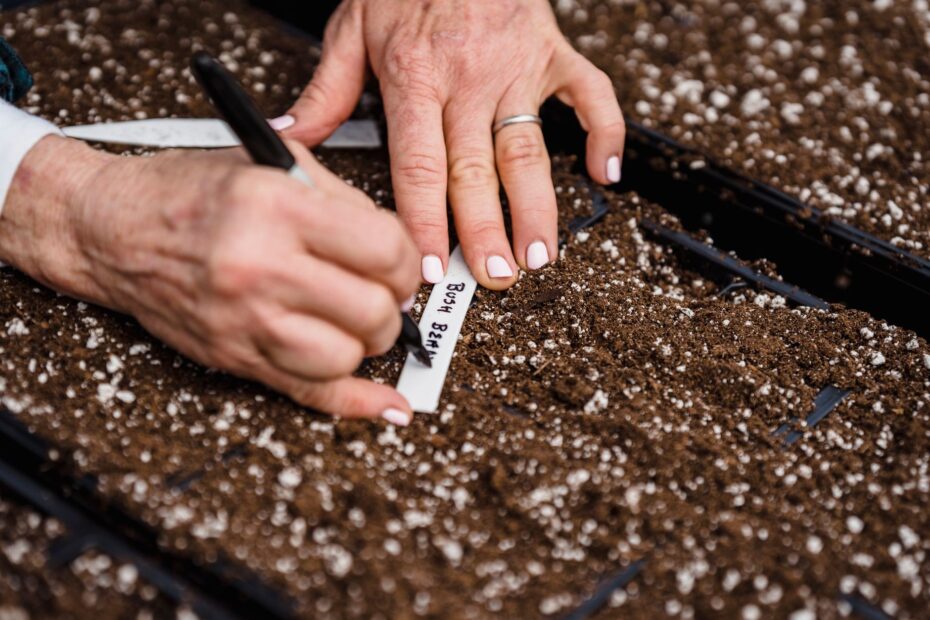
- Label each row: Mark the crop name and sowing date before bare soil looks identical again.
Small Seeds Need Surface Moisture
Lettuce and carrot seeds sit close to the surface, where one hot, windy day can dry the germination zone. You need light, repeated watering until sprouts appear, then deeper watering as roots move down.
Large seeds such as beans, peas, and squash sit deeper in moisture, but cold saturated soil can rot them. Seed size guides sowing depth, while seed-coat thickness affects how fast water enters the seed.
Outdoor Starts Face Uneven Conditions
Crusted soil can trap a sprout below the surface after heavy rain, and birds can pull up bean seedlings for the seed still attached. Thin crowded plants after true leaves appear so remaining roots have room.
Do not use a hard stream of water on shallow rows. A gentle shower or rose attachment protects seed placement and leaves the surface less prone to crusting.
Gaps do not always mean a failed bed. Your spare seed gives you a way to reseed empty spots while nearby plants keep growing.
That flexibility with direct sowing contrasts with transplants, which must arrive prepared for outdoor conditions.
Healthy Transplants Need Readiness and Gentle Outdoor Moving
True Leaves Signal Planting Readiness
Seed leaves are smooth starter leaves that open at germination, while true leaves carry the crop’s adult shape. A seedling is ready for outdoor planting after it has several true leaves, a sturdy stem, and roots that hold the medium together.
Your calendar should not control this stage alone. Tomatoes can need six to eight weeks indoors, while squash starts can outgrow a cell in three weeks and become hard to move without root disturbance.
Hardening Off Builds Outdoor Tolerance
Indoor leaves have not faced full sun, moving air, or cool nights. Hardening off exposes seedlings to those conditions in stages across seven to 10 days, starting in a sheltered shaded spot.
- Start in shade: Place seedlings outdoors for a few sheltered hours on day one.
- Add daylight: Extend outdoor time each day while keeping strong midday sun brief.
- Expose to breeze: Allow mild wind after plants hold their leaves firm outdoors.
- Include cool nights: Leave hardy plants out longer as temperatures match planting conditions.
- Plant after adjustment: Set hardened seedlings into soil during mild, cloudy weather.
Careful Handling Limits Shock
Cloud cover gives newly planted roots time to drink before leaf moisture loss rises. Slide each plant from its container, disturb the root ball as little as possible, set it at the proper depth, and water deeply.
Keep soil evenly moist for several days while roots enter surrounding ground. Your tomato can go deeper along its stem, but lettuce, peppers, brassicas, cucumbers, and squash belong at their prior soil level.
Each Garden Bed Calls for a Practical Choice
A long row of carrots needs a different plan than four pepper plants beside a patio. Direct sowing vs transplanting becomes clearer after crop biology, soil warmth, frost timing, and your available care time sit in the same plan.
- Choose direct sowing: Plant carrots, radishes, beans, peas, beets, broad rows, and fast crops from seed.
- Choose transplants: Set out raised starts for tomatoes, peppers, brassicas, and long-season flowers.
- Delay tender crops: Wait for frost-free nights and warm ground before setting warm-season plants outside.
- Check root condition: Avoid starts with dense circling roots that resist spreading into garden soil.
- Match bed spacing: Transplants give exact spacing, while direct seed suits dense bands and repeated rows.
- Keep spare seed: Hold back seed for gap filling after poor emergence or weather damage.
Common mistakes begin before planting day. Starting tomatoes too far ahead creates tall, root-bound plants; placing tender starts into cold ground stalls growth; skipping hardening off can scorch foliage within hours.
Your lowest-cost route is seed for crops that sprout and mature quickly outdoors. Indoor seed starting makes the strongest case for a long-season crop that needs warm weather before its fruit can ripen.
What to Remember
Match the method to your crop’s roots and the calendar in your garden, not the method that looks more advanced. Direct seed protects sensitive roots and fills large areas with low setup costs, while transplanted starts add growing time for crops that need warmth. Your harvest starts with soil conditions that fit the plant in front of you.
FAQ
What is the difference between direct sowing and transplanting?
Seeds planted in place mature where they sprout, while tray-grown seedlings move into the garden later. You direct sow crops such as carrots and beans to avoid root disturbance, while tomatoes and peppers benefit from extra indoor growing time.
Is it better to direct sow or transplant?
Neither method suits every bed. You should direct sow root-sensitive and fast crops such as carrots, radishes, beans, and peas, while tomatoes, peppers, brassicas, and many flowers benefit from a protected start that extends the outdoor growing season.
What are the disadvantages of direct seeding?
Direct-seeded plants face cold soil, drying winds, crusting rain, birds, insects, weeds, and uneven germination. You also need to thin crowded seedlings and water shallow rows carefully, especially while tiny seeds such as carrots and lettuce are sprouting.
Which vegetables should be direct sown rather than transplanted?
Carrots, radishes, beans, peas, and beets are strong choices for direct sowing. Your garden can also take cucumbers and squash from seed after soil warms, though very young starts can work in short growing seasons.
Which crops benefit most from indoor starts and transplanting?
Tomatoes, peppers, eggplants, broccoli, cabbage, kale, and petunias benefit from raised seedlings. Your indoor space gives these crops warmth and extra growth time before outdoor conditions can support them.
How old should seedlings be before transplanting outdoors?
Plant readiness matters more than a fixed week count. You should move seedlings after several true leaves appear, stems feel sturdy, and roots hold the growing medium together without dense circling. Squash needs less indoor time than tomatoes or peppers.