After a heavy rain, surplus water moves through soil pore space and beyond the root zone, while smaller pores retain moisture for plants. Water that lingers beside a tomato signals blocked movement, leaving roots short of air and vulnerable to stress.
The sections below help you trace water from surface entry to site-scale drainage choices, whether you tend vegetables, shrubs, or a lawn with recurring wet spots.
Soil Drainage Follows Water Through the Root Zone
Rain does not vanish at the ground surface. Water enters openings between particles, travels through soil layers, and leaves the part of the soil where your plants feed and breathe. That sequence explains why two beds only 10 feet apart can react differently after the same storm.
Four terms describe separate parts of the water path. You can use them to identify whether water is entering, moving downward, leaving your root zone, or flowing across your yard.
| Water movement | What happens | What you may see |
|---|---|---|
| Infiltration | Water enters the soil surface. | Your sprinkler water soaks in rather than sheeting away. |
| Percolation | Water moves downward through soil layers. | Moisture reaches deeper roots after a soaking rain. |
| Drainage | Surplus water leaves the root zone. | Large pores empty and air returns. |
| Runoff | Water moves across the ground surface. | Your mulch shifts, or water heads toward a low spot. |
Productive ground does not release every drop. It holds water in fine pores for roots, then releases surplus water from larger pores. Soil drainage for plants depends on that balance between stored moisture and air-filled space.
Soil Pore Space Moves Water Through Gravity and Capillary Action
Connected soil pore space works like a network of small passages after heavy rain. Gravity drainage pulls water through larger channels after they fill, moving surplus moisture downward through the soil profile. Your soil structure controls how well those channels connect.
Large Pores Release Water and Refill With Air
Macropores are larger gaps left by roots, earthworms, cracks, and crumb-like aggregates. Water drains from them quickly, then air moves back in. Your roots and soil organisms need that oxygen throughout the day and night.
A worm channel can carry water deeper than the surrounding compacted soil. Root tunnels do the same job after a plant dies back, leaving routes for water and air. Those visible openings show why undisturbed soil structure matters in your bed.
Small Pores Hold Water for Roots
Capillary action holds water against gravity in smaller pores. A healthy root can draw part of that stored moisture after unbound water has moved lower. Your vegetables need both pore sizes: large spaces for air and small spaces for water storage.
Soil compaction disrupts that balance. Foot traffic squeezes larger channels shut, so water stays near the surface, oxygen drops, and runoff rises along the packed strip. Your path through a garden bed can change drainage more than a single rainstorm.
Soil Texture and Structure Produce Different Drainage Patterns
Sand, silt, and clay differ in particle size, and that difference changes the pace of water movement. Sandy soil has wider gaps between grains, while clay holds water in much finer pores. Your soil texture sets the starting point, but structure can change the result.
| Soil type | Drainage pattern | Root-zone effect |
|---|---|---|
| Sandy soil | Fast water movement through large pores | Your bed can dry quickly and lose dissolved nutrients. |
| Loam soil | Mixed pore sizes with moderate movement | Your plants receive air and stored moisture together. |
| Clay-rich soil | Slow movement through tiny water-holding pores | Your roots face saturation longer after rain. |
Texture means the share of sand, silt, and clay in your soil. Soil structure means how those particles gather into stable clumps called aggregates. A clay bed with strong structure can drain far better than a compacted clay bed because cracks and old root channels give water routes downward.
Clay has many pores, yet pore size and connection matter more than pore count alone. Its tiny spaces hold water tightly through capillary action, and compaction can close the few larger routes. Your clay lawn can stay slick at the surface while the deeper layer remains short of air.
Sandy soil drains water fastest because its large particles leave wide channels between grains. Fast movement has a tradeoff, though. Your shallow-rooted plants can run short of water and soluble nutrients after a hot, dry stretch.
Root Health Depends on Balanced Water Movement
Yellow leaves after repeated rain can point to roots short of oxygen rather than a fertilizer shortage. Saturated soil fills air spaces with water, slowing gas exchange around root tissue. Your plants then grow slowly, shed leaves, and face greater pressure from root disease and rot.
Slow Drainage Leaves Roots Short of Oxygen
Tomatoes, peppers, lavender, and woody shrubs struggle in waterlogged ground. Their roots need air between watering cycles, especially during warm weather with active growth. A sour smell from a wet planting hole can signal low-oxygen conditions below the surface.
Standing water for 24 hours after a modest rain deserves a closer look. The issue may sit in the topsoil, a dense layer 6 to 18 inches below grade, or a shallow water table. Your next step depends on where water stops moving.
Fast Drainage Can Leave Plants Dry
Rapid movement has its own cost. Water can move below shallow roots before your plants use it, carrying nitrate and other soluble nutrients downward. Sandy beds benefit from smaller irrigation rounds and compost additions that hold moisture longer.
Drainage trouble is not solved by chasing the fastest rate. Your target is a root zone that releases surplus water while retaining enough moisture for the crop or landscape plant in that spot.
Plant choice changes the target. Daylilies tolerate heavier ground than lavender, while willow accepts wetter soil than rosemary. Your planting plan works better when it follows the soil behavior already present on the site.
Surface Clues Reveal Why Water Stays Put
Persistent puddles, muddy ground, surface crusting, runoff, and weak plants show that water is failing to enter or leave at the needed pace. Your observations should start after rain, irrigation, or snowmelt, before the surface has dried enough to hide the pattern.
- Hard surface layer: Water beads or runs sideways, showing soil compaction after construction traffic or repeated foot traffic.
- Wet planting holes: Water remains in a dug hole, pointing toward dense clay or hardpan beneath topsoil.
- Repeated puddles: A low area fills after storms because the grade directs water into a depression.
- Wet ground below: A shallow water table blocks downward movement because lower soil is already saturated.
- Moving surface water: Mulch washes downhill, showing slope-driven runoff rather than poor percolation alone.
A hardpan is a dense subsoil layer that roots and water struggle to cross. Construction sites can leave one 6 to 18 inches below grade after heavy equipment presses wet soil. Your shovel may strike a sudden firm layer beneath loose topsoil.
Runoff and ponding call for different responses. Water moving across a slope points toward surface control, while water sitting in a basin points toward low grade, dense soil, or a high water table. That distinction keeps your effort focused on the source rather than the symptom.
A simple measurement below the surface can separate a temporary puddle from a persistent root-zone problem.
A 12-Inch Drainage Test Shows Root-Zone Movement
A 12-inch-deep hole gives you a practical view of the root zone rather than the top inch that dries in the sun. This drainage test shows whether water remains trapped, moves at a middle pace, or disappears so quickly that your bed holds little moisture.
- Dig the hole: Dig a hole about 12 inches deep and 6 to 12 inches wide in an undisturbed part of your bed.
- Pre-soak the soil: Fill the hole with water and allow it to drain, which wets dry pore surfaces before measurement.
- Refill and mark: Fill it again, mark the water line, and record the depth at the start.
- Track the drop: Measure water loss after one hour, then repeat during the next few hours for a clearer pattern.
| Observed rate | What it suggests | Your next move |
|---|---|---|
| Less than 1 inch per hour | Slow movement and possible root-zone saturation | Look for compaction, hardpan, low grade, or a high water table. |
| About 1 to 3 inches per hour | Moderate movement for many garden plants | Match irrigation and plant choices to the bed. |
| More than 3 inches per hour | Rapid movement with limited moisture storage | Add compost and watch for drought stress or nutrient leaching. |
How long water takes to drain through soil depends on depth, weather, plant needs, and patterns across several spots. A single hole after a dry spell can mislead your assessment. Repeat the drainage test after similar rainfall or irrigation conditions, then compare high and low parts of your yard.
How to test soil drainage comes down to repeatable observations at the same depth. A sandy bed can empty in minutes, while compacted clay can hold water for many hours or longer. Your record of water depth, timing, and location reveals more than one isolated measurement.
Repeated observations turn a drainage diagnosis into a targeted remedy rather than a generic soil amendment.
Soil Improvements Work Best When They Match the Barrier
Compacted ground responds to pore-restoring work rather than surface decoration. Keep repeated traffic off wet beds, loosen soil only after it crumbles rather than smears, and keep wheelbarrow routes outside growing areas. Your roots gain more from protected pore space than aggressive digging every season.
Organic Matter Helps Soil Hold Air and Water
Compost feeds soil life that gathers particles into stable aggregates. Those aggregates leave both large and small openings, allowing drainage and water storage to coexist. Spread 1 to 2 inches of finished compost over a garden bed and mix it into the upper soil where suitable.
- Reduce traffic: Keep feet, carts, and equipment off wet beds to protect air-filled channels.
- Grow deep roots: Use daikon radish or deep-rooted cover crops where space allows to open dense layers.
- Mulch the surface: Cover bare ground with shredded leaves or bark to soften raindrop impact and limit crusting.
- Water in cycles: Deliver irrigation in shorter rounds so your soil absorbs water without runoff.
- Match plant types: Place moisture-loving plants in slower spots and drought-tolerant choices in fast-draining areas.
Do not mix a small amount of sand into heavy clay soil. That blend can pack into a dense, concrete-like mass unless you install a full engineered soil mix at the correct ratio.
How to improve soil drainage starts with protecting structure over several seasons. Compost, mulch, reduced traffic, and measured irrigation produce a more durable change than repeated tilling. Your soil gains stable aggregates rather than a freshly disturbed surface that can crust after rain.
Raised Beds, Grading, and French Drains Address Different Problems
Surface changes cannot lower water that is already rising from below. Raised beds place planting soil above dense native ground or a seasonally high water table, giving vegetables added root depth. Your crops can grow in better-aerated soil while lower layers remain wet.
| Site condition | Suitable response | What the response changes |
|---|---|---|
| Dense native soil beneath vegetables | Raised beds | Your root zone sits above the slow layer. |
| Rain runs toward a house | Grading, swales, or surface channels | Water travels away from foundations. |
| Persistent groundwater or perched water | French drain or drain tile with an outlet | Subsurface water has a route out of the area. |
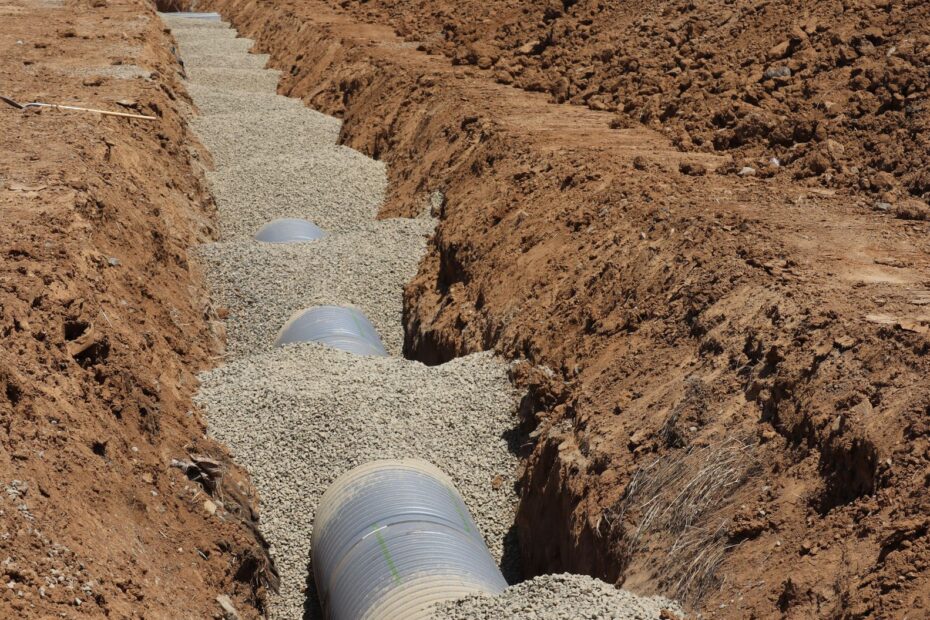
A swale is a shallow shaped channel that slows and redirects surface flow. A French drain uses perforated pipe in gravel to collect subsurface water, while drain tile describes similar buried piping in agricultural drainage systems. Your drain needs a lawful, workable outlet because a pipe ending in saturated soil shifts water into another wet pocket.
Soil drainage methods should follow the cause. Improve soil where compaction or weak structure blocks pore space; reshape grade where surface flow heads toward a house; use buried drainage where groundwater or perched water remains. Your site benefits from a drainage or landscape professional where wetness extends across the property.
Final Thoughts
Healthy soil acts like a sponge with open breathing passages. Your goal is neither mud nor dust, but a root zone that stores usable water, releases surplus moisture, and refills with air after rain. Watch the water route before changing the soil because compaction, low grade, and a high water table each need a different response.
How soil drainage works becomes clearer after you watch one storm from start to finish. Track where water lands, where it pauses, and where it exits. Your notes from a 12-inch hole and a rainy afternoon can point toward the right scale of work.
FAQ
How do I know if my soil is draining properly?
Your soil is draining properly when rain or irrigation enters without long-lived puddles, then leaves the root zone while plants remain evenly moist. A 12-inch hole check showing about 1 to 3 inches of water loss per hour suits many garden beds, though your crop and soil depth still matter.
How long does it take for water to drain through soil?
Water can drain through sandy soil in minutes, while compacted clay can hold it for many hours or longer. Your useful benchmark comes from repeated observations at the same depth because recent rain, dry soil, a shallow water table, and plant needs affect the timing.
Which type of soil drains water the fastest?
Large sand particles leave wide pore spaces between grains, allowing water to pass through faster than in other soil types. Your sandy bed still benefits from compost and mulch because fast movement can carry water and soluble nutrients below shallow roots before plants absorb them.
What helps soil drain better?
Compost, reduced foot traffic, deep-rooted cover crops, mulch, and irrigation in shorter rounds can improve drainage where compaction or weak structure causes the problem. Your site may need grading, raised beds, or a subsurface system where slope, a depression, or groundwater causes wetness.
When should I improve the soil versus install a French drain or other drainage system?
Improve the soil where compaction, crusting, or weak aggregates slow water near the root zone. Your site needs a French drain or similar buried system where groundwater or perched water remains below the surface and a workable outlet exists.
Can soil drain too quickly for plants to grow well?
In a sandy bed, water can move below the reach of shallow roots before plants can absorb it. Your sandy bed can hold moisture longer with compost, mulch, and shorter irrigation rounds spaced through dry weather.