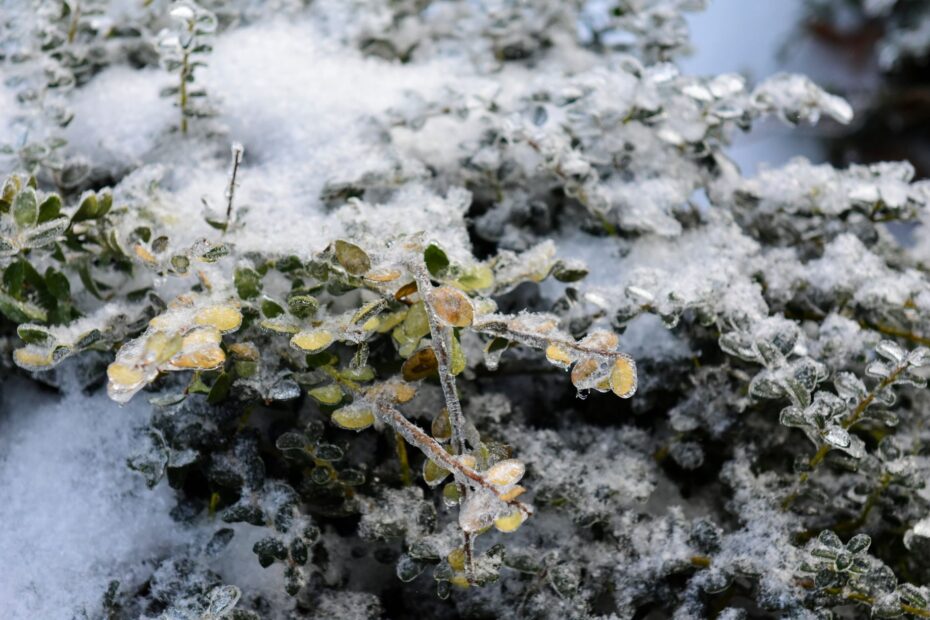
Each full zone spans 10 degrees Fahrenheit in average annual extreme minimum temperature, while lettered halves mark 5-degree bands. That gap sets the winter cold a perennial must endure, so rosemary that returns in Zone 7 can lose stems after a hard Zone 5 January night.
Your map lookup, plant labels, and bed-level observations show how winter cold, summer heat, drainage, and wind shape a sound planting choice.
USDA Zones Classify Winter Cold
A zone number marks the coldest winter range a location reaches across many years. The USDA Plant Hardiness Zone Map uses the average annual extreme minimum temperature, not the average temperature across an entire winter.
Your Zone 7 location has milder expected winter lows than a Zone 5 location. That fact does not mean your summers run hotter, your frost-free period runs longer, or every plant suits your yard.
Cold damage can follow one sharp temperature drop rather than a season-long average. A maple can endure months of cool weather yet suffer after temperatures fall below the low its living tissue tolerates.
Think of the zone as a winter survival screen. It sorts plants by outdoor cold exposure, then leaves sunlight, moisture, soil texture, pests, and summer heat for your next choice.
Numbers and Letters Mark Temperature Ranges
Each whole number spans 10 degrees Fahrenheit. The letters divide that range into two 5-degree subzones, giving your planting plan a closer winter-low reference.
Zone 5 spans minus 20 F to minus 10 F. Zone 5a covers the colder half, while Zone 5b covers the warmer half, so the letter shifts your cold threshold without changing the whole-number category.
| Zone | Full temperature range | a subzone | b subzone |
|---|---|---|---|
| 1 | Below -50 F | Below -60 F | -60 F to -50 F |
| 2 | -50 F to -40 F | -50 F to -45 F | -45 F to -40 F |
| 3 | -40 F to -30 F | -40 F to -35 F | -35 F to -30 F |
| 4 | -30 F to -20 F | -30 F to -25 F | -25 F to -20 F |
| 5 | -20 F to -10 F | Zone 5a: -20 F to -15 F | Zone 5b: -15 F to -10 F |
| 6 | -10 F to 0 F | Zone 6a: -10 F to -5 F | Zone 6b: -5 F to 0 F |
| 7 | 0 F to 10 F | 0 F to 5 F | 5 F to 10 F |
| 8 | 10 F to 20 F | 10 F to 15 F | 15 F to 20 F |
| 9 | 20 F to 30 F | 20 F to 25 F | 25 F to 30 F |
| 10 | 30 F to 40 F | 30 F to 35 F | 35 F to 40 F |
| 11 | 40 F to 50 F | 40 F to 45 F | 45 F to 50 F |
| 12 | 50 F to 60 F | 50 F to 55 F | 55 F to 60 F |
| 13 | Above 60 F | 60 F to 65 F | Above 65 F |
Your planting choices become clearer once the number reads as the larger band and the letter reads as its colder or warmer half. This difference between hardiness zones clears up confusion around Zone 5b and Zone 6b.
Zone 5b and Zone 6b Occupy Warmer Halves
Zone 5b is warmer than Zone 5a, but it is not warmer than Zone 5 as a whole. Zone 5 is the full minus 20 F to minus 10 F range containing both lettered subzones.
| Comparison | Temperature change | Meaning for your planting plan |
|---|---|---|
| Zone 5a to Zone 5b | Warmer by 5 F | Your site remains inside Zone 5. |
| Zone 5b to Zone 6a | Warmer by 5 F | Your site moves from Zone 5 into Zone 6. |
| Zone 6a to Zone 6b | Warmer by 5 F | Your site remains inside Zone 6. |
The shift from 5b to 6a feels larger because the number changes, yet the temperature step remains 5 degrees. Your plant label may list only “Zone 5,” which includes both Zone 5a and Zone 5b.
Zone 6b is 5 degrees warmer in average annual extreme minimum temperature than Zone 6a. A shrub rated through Zone 6 has a wider winter cushion in your 6b garden, though a sudden cold snap can still injure tender growth.
That vulnerability makes the wording on a plant label worth reading as carefully as its zone number.
Your mapped zone describes a long-term temperature pattern, not a promise that every winter stays inside that range.
Plant Labels Describe Cold Survival
A label stating “hardy to Zone 7” means the plant can survive expected Zone 7 winter lows and warmer zones, provided its other needs are met. The plant hardiness rating meaning concerns cold survival, not bloom size, fruit yield, or year-round appearance.
Your Zone 6 garden sits below that stated cold limit. A Zone 7 camellia can survive a mild year there, but exposed roots, frozen soil, or an abrupt plunge below its tolerance can leave brown leaves and dead stems by spring.
Survival and performance are separate measures
Winter endurance is one part of plant health. A lavender rated for your zone can live through January yet decline in heavy clay that holds water around its crown.
Summer heat creates a separate strain. A peony can survive a mild Zone 8 winter, yet low winter chill and sustained heat can reduce flowering even though its roots never freeze.
- Check sun hours: Match the label’s light range to the hours your bed receives during midsummer.
- Read soil needs: Sandy ground drains quickly, while dense clay can hold damaging winter moisture around roots.
- Watch humidity: Dry-climate plants can struggle where humid nights keep foliage damp for hours.
- Account for wind: Cold wind strips moisture from evergreen leaves and raises winter injury risk.
- Protect root health: A stressed plant enters winter with less stored energy than a well-watered, established plant.
Those limits show why a zone label is a starting point rather than a planting verdict. Your next step is finding the mapped classification attached to your address.
Map and ZIP Code Lookups Set a Starting Point
The USDA Plant Hardiness Zone Map gives your U.S. address a useful starting reference. Its ZIP code lookup supplies a fast result, while the map shows where nearby color bands change across counties and terrain.
Your ZIP code can cover several communities, ridge lines, or river valleys. Compare the result with the map near your neighborhood, especially along a boundary inside the ZIP area.
Climate normals and mapping methods change across map editions, so older nursery tags can conflict with the map shown today. Use the USDA source rather than an undated chart copied into a planting calendar.
State-level planting zone maps help with broad planning, but they lack street-level detail. A border area in western Pennsylvania, northern Virginia, or the foothills of Colorado deserves a closer map review before you stretch a plant’s listed limit.
Europe uses hardiness references too, yet its zone labels and regional climate patterns do not replace the U.S. map. For your American garden, use the USDA scale printed on plant labels, then inspect conditions around the planting bed.
Microclimates Shift Conditions Across One Yard
A brick wall facing south absorbs daytime heat and releases it after sunset, leaving the nearby bed warmer than an open lawn. Pavement, dense buildings, and city streets form an urban heat island that softens nighttime cold.
Your sheltered courtyard can act as a warmer pocket, especially with overhead protection from wind. Water moderates nearby air temperatures, while a slope can send cold air toward lower ground.
Cold air settles in low ground
On clear, calm nights, dense cold air drains downhill and pools in shallow depressions. A tender fig at the bottom of a yard can suffer frost damage while the same plant survives 30 feet uphill near a fence.
Exposed hillsides, windy corners, and poorly drained beds bring separate hazards. Wet roots freeze more readily, and wind can dry broadleaf evergreens during bright winter days.
Track snow cover, standing water, wind direction, and nearby plant survival for two winters before treating your mapped zone as the exact condition at every bed.
Those observations turn a broad regional label into a useful site profile. With that profile, your plant choice becomes a layered decision rather than a guess based on one number.
Plant Selection Uses More Than Winter Cold
Start with winter cold, then narrow your choices through conditions that shape daily growth. A plant suited to your zone but set in shade, compacted soil, or standing water still faces a poor match.
Your frost dates serve a separate purpose from hardiness zones. They help you time vegetable seedlings, while the zone helps you judge whether a woody perennial can live through winter outdoors.
Heat ratings fill the summer gap
The American Horticultural Society Heat Zone Map records the average number of days above 86 F. Its ratings show heat tolerance, a trait the USDA cold map does not describe.
Use both references for warm-climate plants. A hydrangea can handle your Zone 7 winter but scorch during repeated high-heat days unless afternoon shade and steady soil moisture reduce stress.
Use a bed-level planting checklist
- Find your map zone: Use the current USDA Plant Hardiness Zone Map, record the number and letter, and learn how to find my planting zone through its ZIP code lookup.
- Study the bed: Mark shade, drainage, prevailing wind, pavement, walls, slopes, and low frost pockets around your planting site.
- Read every label: Match cold range, mature size, light needs, water needs, and soil conditions before planting.
- Use frost dates: Time annuals and tender vegetables around local spring and fall frost patterns rather than the zone number alone.
- Check summer stress: Use AHS Heat Zone data where sustained heat affects flowering, fruiting, or leaf quality.
Hardiness zone differences become useful beside the real conditions in your yard. That layered method stops a plant tag from overruling the evidence around your planting bed.
Bottom Line
Your zone states the winter low a plant must survive, not whether that plant will thrive in your soil or summer weather. Treat the number and letter as a cold-risk filter, then use sunlight, drainage, moisture, wind, heat, and microclimates to make your final choice.
FAQ
What is the difference between hardiness zones?
A 10-degree Fahrenheit shift in average annual extreme minimum temperature separates each full zone. Your lettered subzone narrows that range by 5 degrees, with “a” colder than “b” inside the same numbered zone.
Is Zone 5b colder than Zone 5?
The 5b subdivision spans minus 15 F to minus 10 F, within the broader Zone 5 range of minus 20 F to minus 10 F. Your Zone 5b location sits in the warmer half of that range, from minus 15 F to minus 10 F.
What does it mean when a plant is hardy to Zone 7?
Survival through typical Zone 7 winter lows is likely when the site also provides suitable light, soil, and moisture. Your Zone 6 site falls below that cold rating, so winter damage becomes more likely.
How are USDA hardiness zones determined?
Decades of weather-station records supply the average annual extreme minimum temperatures used to map USDA zones. The map sorts those winter lows into 10-degree zones and 5-degree lettered subzones.
How do I know what hardiness zone I am in?
Use the USDA hardiness zone map ZIP code lookup, then inspect the map around your address. Your ZIP code can cross terrain or community boundaries, so the color band near your home gives useful confirmation.
What are the differences between Zone 6b and Zone 6a?
Winter minimums from minus 10 F to minus 5 F define 6a, while 6b runs from minus 5 F to 0 F. Your Zone 6b location has an average annual extreme minimum temperature 5 degrees warmer than a Zone 6a location.