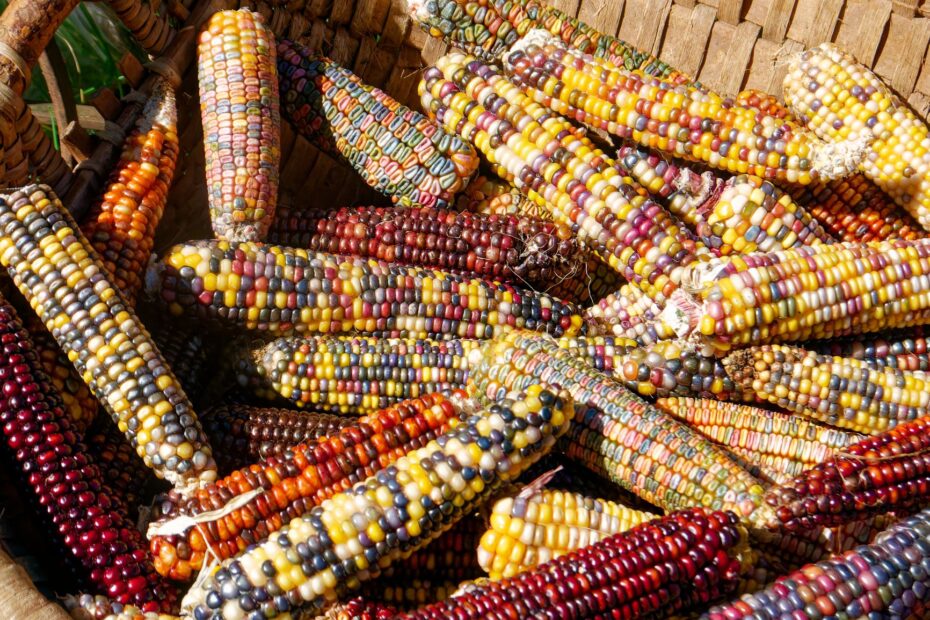
Hybrid vs. heirloom seeds refers to a choice between deliberate F1 crosses and stable, open-pollinated varieties maintained through seed saving. You’ll see that difference in fruit uniformity, disease resistance, flavor, maturity timing, and whether seed from your harvest grows true to type next season.
Your garden space, climate, harvest goals, and interest in seed saving all shape which seed type fits each crop. Both types have useful strengths and clear trade-offs.
Breeding Methods Shape Each Seed Type
An F1 packet starts with two selected parent lines. A breeder transfers pollen from one parent to another, collects the seed from that controlled cross, and sells the offspring as a hybrid. Your plants carry traits from both parents, such as compact growth from one line and resistance to a tomato disease from another.
Heirloom seeds follow a different path. They are named, open-pollinated varieties kept alive through repeated cultivation and seed saving. You may grow Cherokee Purple tomatoes, Kentucky Wonder beans, or German Pink tomatoes because gardeners kept selecting and sharing those named strains across decades.
| Seed type | How it begins | What the label tells you |
|---|---|---|
| F1 hybrid | Two selected parent lines are crossed through controlled pollination. | Your crop carries a planned mix of traits from both parents. |
| Heirloom | A named open-pollinated variety is maintained across generations. | Your crop carries a history, a distinct identity, and seed-saving potential. |
| Open-pollinated | Plants reproduce through wind, insects, or hand pollination within a stable variety. | Your saved seed can grow true to type with enough isolation. |
| Organic | Seed production follows organic production rules. | Your packet’s breeding type is not defined by this label. |
The term heirloom has cultural weight, but no single legal age threshold. Some seed keepers use 50 years as a marker, while others focus on varieties linked to families, regions, or pre-industrial plant breeding. Your packet may carry an heirloom label even though another seed organization uses a narrower definition.
That flexible history can blur the terms at a seed rack. The biological split is clearer: hybrids begin as planned crosses, while heirlooms belong to the wider group of stable open-pollinated seeds. Their stability explains why seed from each type behaves differently after harvest.
Open Pollination Preserves Stable Varieties
Pollination Keeps a Named Variety Consistent
Bees, wind, moths, and hand pollination move pollen among compatible plants. An open-pollinated crop is not left to chance, though. Growers select plants that match the named variety, remove obvious off-types, and separate compatible varieties to limit stray pollen.
Your saved Brandywine tomato seed can produce Brandywine-like plants because the parent population has been stabilized over generations. Tomato flowers tend to pollinate themselves, so your home seed saving is less demanding than seed saving with corn, squash, cucumbers, or cabbage-family crops.
Cross-pollination changes that picture. Sweet corn and field corn exchange pollen readily, and squash varieties within the same species can cross. A squash fruit still looks normal in the harvest year, but seed from that fruit can produce surprising plants in the next planting.
Heirloom Varieties Belong to the Open-Pollinated Group
Not every open-pollinated variety is an heirloom. A breeder can release a modern open-pollinated lettuce or pepper that grows true to type without a long historical record. Your catalog may list it as open-pollinated because that breeding system, rather than age, is the useful detail.
Stable seed gives you a repeatable starting point, not an identical crop every year. Soil, heat, rainfall, spacing, and harvest timing still alter flavor and yield. A San Marzano tomato grown through a wet Midwest summer will not taste identical to fruit raised in dry California heat.
Isolation distance depends on the crop. Save tomato seed with modest separation and careful selection; save corn seed only after accounting for pollen drifting far beyond a backyard row.
This reproductive pattern also clears up a common mix-up. Open pollination and heirloom status describe breeding and reproduction. Genetically modified organisms (GMOs) and organic seeds describe separate parts of a seed’s history.
Hybrid Breeding Differs From Genetic Engineering
A breeder can make an F1 tomato with a paintbrush, a pollen bag, and two compatible tomato parents. This is plant breeding through controlled pollination. The pollen and ovule meet through the same reproductive process that takes place in an open garden.
Genetic engineering changes genetic material through laboratory methods. A genetically modified organism, or GMO, has a genetic change introduced through methods beyond ordinary crossing. Your hybrid seed is not inherently GMO seed, and a hybrid label does not signal genetic engineering.
| Label or method | What it describes | What it does not tell you |
|---|---|---|
| Hybrid | A controlled cross between selected parent varieties. | Whether seed was grown under organic rules or altered through genetic engineering. |
| Heirloom | A preserved open-pollinated variety with historical or cultural value. | Whether a crop has strong resistance to local disease. |
| GMO | A crop changed through genetic engineering. | Whether its fruit tastes better or grows true from saved seed. |
| Organic | Production methods used for the seed crop. | Whether the variety is hybrid, heirloom, or open-pollinated. |
Heirloom seed is not automatically organic. An heirloom packet can come from organic production, conventional production, or another system. Your seed label needs both pieces of information: the variety’s breeding type and the production claim.
Cornell University and UC Agriculture and Natural Resources frame variety selection around traits and growing conditions rather than a moral ranking of labels. That approach keeps your attention on the feature that changes harvest results: genetics selected for a particular crop and growing site.
Uniformity and Hybrid Vigor Affect Harvest Timing
F1 Plants Produce More Consistent Crops
Rows of hybrid cabbage can reach harvest size within a tighter window than a mixed open-pollinated planting. F1 parents are inbred and selected for specific traits, so their offspring share a more consistent genetic pattern. Your harvest can show closer matches in fruit size, color, plant height, and maturity date.
That predictability matters in a 90-day growing season. A hybrid slicer listed at 65 days gives you a clearer schedule for trellising, harvest, and replanting than a variable tomato population that ripens over several weeks.
Commercial growers favor uniform harvests because grading, packing, and field labor depend on timing. A market grower can pick matching bell peppers for a Saturday stand instead of sorting tiny, medium, and oversized fruit from the same bed.
Hybrid Vigor Has Clear Limits
Some crosses show hybrid vigor, also called heterosis. The F1 plant can grow faster, set more fruit, or handle stress better than either parent line. Your results still rest on soil fertility, light, water, and disease pressure during that growing season.
A hybrid is not invincible. A tomato bred with resistance to fusarium wilt can still struggle with poor drainage, nutrient shortages, hornworms, or late blight. Read resistance codes as useful information, not as a promise that garden problems disappear.
Match resistance letters to the trouble already present in your plot. A packet’s code matters most after you identify the crop disease that has reduced your harvest.
Uniformity brings a trade-off. The same selection that gives you synchronized ripening can narrow the range of fruit shape, color, and unusual flavor that makes heirloom crops memorable.
Flavor and Diversity Bring Different Trade-Offs
A purple tomato with green shoulders can taste rich and smoky, even though it would look uneven beside glossy market fruit. Heirloom selections preserve flavors, colors, seed shapes, and regional histories that standardized crop lines may leave behind. Your summer plate can hold yellow pear tomatoes, speckled beans, and watermelon radishes from a wider visual range.
Variation is part of the package. A row of heirloom tomatoes may ripen across a longer span, produce fruit with uneven shoulders, or vary in size after a hot spell. That pattern can work well in your home kitchen, where steady picking may matter more than one concentrated harvest.
| Garden trait | Hybrid tendency | Heirloom tendency |
|---|---|---|
| Flavor and appearance | Selected for a defined fruit profile. | Broader range of colors, textures, and distinctive tastes. |
| Maturity timing | Tighter harvest window. | More spread in ripening and fruit size. |
| Genetic diversity | Focused traits from selected parents. | Preserved variety histories and wider crop options. |
| Disease response | Some varieties carry named resistance traits. | Performance rests more heavily on local adaptation and care. |
Your local conditions can make an heirloom surprisingly tough. A bean passed among gardeners in humid Appalachia may handle that region’s summer pattern better than a variety bred far away. Seed saved from healthy plants that perform well in your soil can become better fitted to your plot over time.
Still, heirlooms have real disadvantages. Uneven maturity complicates preserving, weak disease tolerance can shrink a crop, and thin-skinned fruit may split after heavy rain. Your care routine needs room for staking, airflow, crop rotation, and close observation.
Genetic diversity matters beyond novelty. Keeping named varieties in gardens and seed collections leaves more traits available for future breeding, from drought response to unusual flavor. That preservation value becomes practical through careful seed saving.
Seed Saving Produces Different Results
F1 Seed Produces a Mixed Follow-Up Generation
Seed from an F1 hybrid is viable. It does not become sterile after harvest. The issue is predictability: traits held together in the hybrid separate in the generation after F1, producing plants that can differ in size, yield, taste, maturity, leaf form, and disease response.
Your saved seed from a hybrid Sungold-type tomato could still grow healthy plants, yet the fruit may be less sweet, later, smaller, or a different color. The answer to can you save seeds from hybrid plants is yes, but you should not expect the named variety to return.
Some gardeners enjoy that variation as a breeding project. Grow a large population, select plants with traits you want, retain seed from those plants, and repeat that work across several growing cycles. A stable new line takes patience and space, not one accidental cross.
Heirloom Seed Needs Clean Parentage
Healthy, fully mature fruit supplies seed for your next crop. For tomatoes, scoop ripe seed with its gel into a jar, allow a short fermentation period, rinse, dry thoroughly, and label the packet with variety and year. Your label becomes part of the seed’s history.
- Choose healthy plants Retain seed from plants with strong growth, sound fruit, and traits you want repeated in your garden.
- Know crop biology Self-pollinating tomatoes need less separation than corn, squash, cucumbers, or brassicas.
- Isolate compatible varieties Use distance, timing, cages, or hand pollination to reduce unwanted crosses.
- Harvest mature fruit Seed from immature fruit lacks the development needed for reliable storage and germination.
- Dry and label seed Keep seed cool, dry, dark, and marked with crop, variety, and harvest year.
Proper isolation lets an heirloom grow true to type, meaning its offspring resemble the named parent variety. Your distance requirement depends on species, pollinator activity, and nearby gardens. A crop-specific isolation chart is more useful than one blanket distance number.
That work reveals a practical split between hybrid vs. heirloom seeds. One gives you a designed one-season package of traits; the other gives you a line you can preserve, select, and pass along with care.
Garden Priorities Point Toward Different Seed Choices
A small garden does not need one seed philosophy. Grow a resistant hybrid cucumber in the bed where disease has ruined vines, then reserve another trellis for an heirloom bean with flavor your household loves. Your space can hold both predictable production and experimentation.
| Priority | Hybrid seed | Heirloom seed |
|---|---|---|
| Saving seed | Viable seed produces variable offspring after F1. | Seed can grow true with selection and isolation. |
| Flavor range | Focused on a selected profile. | Wide range of regional and unusual traits. |
| Yield consistency | More even plant and fruit performance. | More variation across plants and seasons. |
| Uniformity | Close matches in size and maturity. | Greater variation in shape and harvest timing. |
| Disease resistance | Named resistance traits appear in many varieties. | Local adaptation can matter, but traits vary widely. |
| Seed cost | Packets can cost more because parent-line production takes labor. | Saved seed can lower future packet needs. |
| Genetic diversity | Selected parent lines focus traits. | Preservation keeps older named varieties in circulation. |
Your strongest choice changes by crop. Hybrid tomatoes fit a short, disease-prone season where you need dependable ripe fruit. Heirloom tomatoes fit seed saving and unusual flavor. A mixed planting fits a kitchen garden that needs steady production and variety.
Seed cost deserves attention. Hybrid production requires controlled pollination and separate parent lines, so each packet can carry a higher tag. Saved heirloom seed reduces future packet needs, though isolation supplies, labels, and discarded off-types take time.
Farmers lean toward hybrids because uniform fruit, planned maturity, and resistance traits make harvest labor easier to schedule. Your backyard plot has different math. One oddly shaped tomato can be a pleasure rather than a sorting problem.
Growing Conditions Clarify the Better Choice
Start each crop with the pressure that has limited your harvest. A short season, container space, recurring tomato disease, or a desire to preserve a family bean points toward a different packet. Your crop goal matters more than loyalty to either label.
Hybrid Varieties Fit Tight Growing Conditions
Beginning gardeners can use F1 varieties to narrow variables in a new plot. A compact hybrid zucchini suited to containers, a fast hybrid broccoli for a cool spring, or a disease-resistant tomato can give your garden a steadier baseline.
- Check maturity dates Match the listed number to your frost-free window, not to the length of summer on a national map.
- Read resistance codes Select traits tied to diseases that have already damaged the same crop in your beds.
- Match plant size Use compact varieties for containers and large indeterminate tomatoes only where your support system can hold them.
- Stagger plantings Sow lettuce, beans, and cucumbers in intervals to spread food across the season.
- Keep garden notes Record harvest dates, flavor, disease symptoms, and yield for each named variety.
Heirloom Varieties Reward Careful Selection
Seed savers, flavor-focused cooks, and gardeners protecting regional varieties gain more from open-pollinated lines. Your notes become selection tools: mark the tomato that stayed crack-free, the bean that filled pods through heat, or the melon that tasted rich after a dry month.
Trial both types before giving every bed to one approach. Plant two tomato varieties beside each other, track ripe fruit across four weeks, and write down flavor, disease, and labor. Your own plot supplies evidence that no catalog description can fully predict.
Keep variety names visible from planting through harvest. A faded tag can erase the information you need before retaining seed or repeating a successful crop.
Heirlooms are stronger for preservation, flavor range, and true-to-type seed saving. Hybrids are stronger for uniformity and targeted traits. Your harvest goal decides which strength matters in that bed.
Bottom Line
Hybrid and heirloom seeds have different genetic behavior. Use hybrids where uniform maturity, compact space, or recurring disease makes predictability valuable. Use heirlooms where you want distinctive food, cultural history, and seed you can retain true to type. Your sharpest garden plan gives each crop the seed type that fits its real constraints.
FAQ
What is the difference between hybrid and heirloom seeds?
The difference between hybrid and heirloom seeds is their breeding history and seed behavior. Hybrid seeds come from a controlled F1 cross between selected parents, while heirloom seeds are stable open-pollinated varieties that can grow true to type after careful isolation.
Are hybrid seeds genetically modified?
Hybrid seeds are not inherently GMOs. Your hybrid seed comes from controlled pollination between compatible parent plants, while a GMO has genetic material changed through laboratory techniques beyond ordinary plant crossing.
Which is better for a home garden: heirloom or hybrid seeds?
Neither type wins in every home garden. Your hybrid choice can deliver uniform growth, planned maturity, and selected disease resistance, while an heirloom can deliver distinctive flavor, regional history, and seed that grows true to type after careful isolation.
Why do farmers often prefer hybrid seeds?
Farmers use hybrids because matching plant size, maturity timing, fruit shape, and resistance traits make field work easier to schedule. Your farm-scale harvest can be picked, packed, and graded with less variation than a genetically mixed planting.
Why do saved hybrid seeds not grow true to type?
You can retain seed from an F1 plant, but the generation after F1 separates traits from its two parent lines. Your resulting plants can be healthy yet differ from the original in fruit quality, yield, maturity, plant form, and resistance.
Can you save seeds from heirloom vegetables?
That seed from heirloom vegetables with proper crop selection, isolation, and labeling. Tomatoes are easier for your home garden because their flowers tend to self-pollinate, while corn, squash, cucumbers, and brassicas need more protection from cross-pollination.