Living off the grid, prepping for storm season, or chasing quiet weekends at a remote cabin all run into the same wall: how much power can you actually carry, and how fast does it refill when the sun comes back? Portable power stations have grown into genuine home-backup and overlanding tools, and the newest generation pairs bigger LiFePO4 (lithium iron phosphate, a longer-lasting, more heat-stable battery chemistry) batteries with sub-one-hour AC charging. The nine units below cover weekend camping, full van life, and multi-day home backup, with honest trade-offs called out for each.
A Side-By-Side Look

BLUETTI Elite 200 V2 Portable Power Station 2073.6Wh
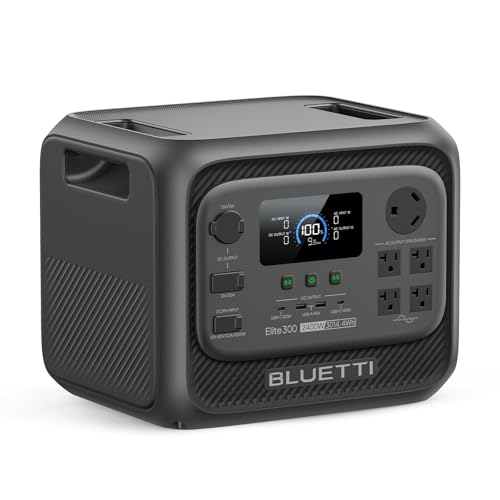
BLUETTI Elite 300 Portable Power Station 3014.4Wh

EF ECOFLOW Delta 3 Portable Power Station 1024Wh

Anker SOLIX C1000 Gen 2 Portable Power Station 1024Wh

BLUETTI Elite 100 V2 Portable Power Station 1024Wh

BLUETTI AC200L Portable Power Station 2048Wh

Jackery Explorer 1000 v2 Portable Power Station 1070Wh

EF ECOFLOW DELTA 3 Max Portable Power Station 2048Wh

Anker SOLIX C1000 Portable Power Station 1056Wh
The Strengths Of Each Pick
The BLUETTI Elite 200 V2 is built for households that want one box that handles almost everything during a multi-day outage. Its 2073.6Wh capacity and 2600W continuous AC output can keep a fridge, Wi-Fi router, and a few lights running for a full evening without breaking a sweat, which is the kind of headroom weekend cabin owners and storm-prepping households actually need.
Compared to the smaller units on this list, the Elite 200 V2 trades portability for runtime. You won’t toss it in a backpack, but it still has built-in handles and a footprint that fits a garage shelf. Where this unit really earns its price is during extended blackouts, where the extra watt-hours translate to fewer generator runs and far less stress.
Useful Highlights
- 2600W continuous handles refrigerators, hair dryers, and small kitchen loads simultaneously
- 2073.6Wh capacity stretches a typical fridge setup across a full overnight outage
- Multiple output ports let you power up to nine devices at once
- LiFePO4 chemistry is rated for years of daily cycling in spec sheets
Worth Noting
- Heavier and bulkier than 1kWh-class units, so vehicle loading takes planning
- Fan noise ramps up under sustained high-watt loads, which matters in quiet cabins
Right Fit For
Households in storm-prone regions who need multi-day backup without the noise of a gas generator.
Swap It Out When
Overlanders and van-lifers will find the BLUETTI Elite 300 a more travel-friendly shape with comparable wattage for the road.
The BLUETTI Elite 300 leans into a real engineering tradeoff: deliver 3kWh of usable energy without the rolling-cart footprint most 3kWh stations require. RVers who pull into tight storage bays and apartment dwellers with one closet for emergency kit will feel that the smaller shell is the actual selling point here, not a marketing footnote.
Recognized as a notably compact 3kWh class unit, the Elite 300 still offers a generous port selection for AC and DC loads. Where it really helps is the move from car to cabin, where traditional 3kWh bricks usually need two trips.
The Helpful Details
- 3014.4Wh capacity in a notably smaller shell than most 3kWh competitors
- Strong fit for RV bays, van conversions, and tight garage corners
- Multiple AC outlets let a couple of high-draw items run side by side
Trade Offs
- Still weighs enough that two-person carry is the realistic plan
- Solar input ceiling can bottleneck off-grid recharging on cloudy stretches
Quick Facts
Best Suited To
Full-time RVers and homeowners with limited storage who still need meaningful runtime.
Look Elsewhere When
If raw wattage is the priority, the EF ECOFLOW DELTA 3 Max delivers 2400W in a more expandable shell.
The EcoFlow Delta 3 sits in the sweet spot many casual users actually need: roughly a kilowatt-hour of capacity, 1800W of output, and the kind of charging speed that lets you refill during a lunch stop. For weekend trips and short outages, that balance is often more useful than a 3kWh giant you only drag out twice a year.
It also slots into EcoFlow’s wider ecosystem, which matters if you anticipate expanding into extra battery packs or pairing it with a Delta Pro 3 over time. Where the Delta 3 helps most is the quick-turn crowd: folks who leave Friday, need full power by Friday night, and want zero babysitting.
Where It Helps
- 1800W continuous covers induction cooktops and most power tools
- 1024Wh capacity is enough for a two-day tent-camping setup with lights and phone charging
- App-based monitoring helps you track draw from a distance
Less Ideal Details
- At roughly 27 pounds, longer carries between vehicle and tent get tiring
- Solar input rate can be tight for off-grid weekenders relying on panels alone
Who Should Grab It
Car campers and tailgaters who want fast recharging and aren’t running whole-home loads.
Not Your Match When
Multi-day outage households will outgrow the runtime quickly; the BLUETTI Elite 200 V2 fits that role better.
The Anker SOLIX C1000 Gen 2 pushes the same 1024Wh capacity as the EcoFlow Delta 3 but jumps to 2000W of output and a faster 49-minute AC top-up. For people who run demanding 1500W-class appliances and don’t have time to babysit a slow recharge, that extra muscle and refill speed make a real difference.
Compared to the BLUETTI Elite 100 V2 covered below, this Anker leans more toward UPS-style home backup and heavier campsite cooking. Owners commonly report the 11-port layout keeps the whole family or crew’s gear running from one brick.
What Makes Sense
- 2000W continuous and 3000W peak handle kitchen appliances and backup sump pumps
- 49-minute AC recharge gets you back to full between short outages
- 10 ports cover a household’s worth of devices simultaneously
Some Limits To Know
- App-dependent fast-charge mode means you’ll want your phone handy
- At 1024Wh, it’s still a 1kWh-class unit for heavy overnight loads
Feature Snapshot
Whose Shelf It Belongs On
Preppers and remote workers who want fast recharging and the wattage for serious appliances.
Another Choice May Suit
Solo travelers watching every pound will find the Jackery Explorer 1000 v2 a lighter, simpler carry.
The BLUETTI Elite 100 V2 is positioned for the campsite, not the garage. Its 1024Wh capacity and 1800W continuous output cover the typical basecamp loadout: lights, phones, a portable fridge, and a small kettle. The 11-port layout is the quiet highlight, since shared family or group setups always need more outlets than expected.
TurboBoost AC charging at 1200W and roughly 1000W of solar input together keep refills reasonable on a sunny weekend. If your group is the one running a projector, speaker, and drone batteries at the same time, this unit earns its keep.
What Works In Its Favor
- 11 ports keep a family or friend group’s gear running together
- Power Lifting mode handles surges beyond the rated 1800W
- Fast AC and solar inputs trim recharge downtime at basecamp
Honest Caveats
- 1820W peak via Power Lifting is software-managed, not true continuous wattage
- Carrying handle can feel small for a hike-in camp spot
Perfect Match For
Group campers and small-event hosts who need many ports more than massive capacity.
Skip It When
Off-grid cabins needing longer runtime will benefit more from the BLUETTI AC200L’s 2048Wh foundation.
The BLUETTI AC200L treats expansion as a first-class feature, not an afterthought. Its 2048Wh base can grow up to roughly 8kWh with BLUETTI’s B210, B230, B300, or B300K battery packs, so a single purchase can scale from weekend cabin to full-time off-grid. That kind of modular path matters for anyone not sure how much capacity they’ll actually need two years from now.
At 2400W continuous, the AC200L has the headroom for induction cooking and most job-site tools. The 45-minute AC recharge, where available, is fast enough that you can refill during a meal break. Where this pick pays off is the long-term household that wants a starting point today and room to grow.
Reasons It Performs
- Scales to roughly 8kWh with compatible BLUETTI battery packs
- 2400W output covers most home appliances and high-draw tools
- LiFePO4 chemistry supports a long daily-cycle life in spec
A Few Limitations
- Sticker price climbs quickly once you add expansion packs
- Larger footprint than the 1kWh picks and harder to position in a small closet
Core Details
Made For
Cabin owners and preppers who want one platform that can grow with their power needs.
Where A Sibling Pick Shines
Travelers who need a turnkey RV-ready unit will prefer the BLUETTI Elite 300 for its built-in RV orientation.
For solo travelers and car campers, the Jackery Explorer 1000 v2 hits a number that often matters more than capacity: 23.8 pounds with a foldable handle. That kind of carry weight is the difference between a one-trip setup and a grumble at the parking lot, especially when you add a tent, cooler, and sleeping gear on top.
Inside that lighter shell, you still get 1070Wh, 1500W AC output, and roughly an hour from empty to full. The 100W USB-C port is a small but welcome detail for anyone running a laptop or camera rig without hunting for a separate brick.
Everyday Perks
- 23.8 lb build is genuinely portable for solo travelers
- 100W USB-C output charges modern laptops directly
- One-hour fast charging keeps weekend logistics simple
Points To Note
- 1500W output is lower than the Anker and EcoFlow 1kWh peers
- Solar panel sold separately, raising the real out-the-door cost
Who It Suits Best
Solo car campers and road-trippers who prioritize weight savings over maximum wattage.
Consider Something Else When
Households running microwaves or hair dryers will want the Anker SOLIX C1000 Gen 2 for its higher 2000W output.
The EcoFlow DELTA 3 Max leans into the harder half of the off-grid problem: when you need to run a 2400W load, smaller stations just shut off. This unit pairs that wattage with a 2048Wh LFP (lithium iron phosphate) battery, so you can power a microwave, induction plate, or jobsite saw without thinking about which outlet the rest of your gear has to leave.
EcoFlow’s X-Stream charging pushes the unit from empty to 80% in roughly an hour, which is a real advantage for short-notice storm prep. Where this pick shines is the workshop or food-truck crowd that actually depends on the watt-hour number being honest under load.
Good Reasons To Consider
- 2400W continuous handles heavy kitchen and tool loads
- 2048Wh LFP battery supports years of regular cycling in spec
- Rapid AC recharging helps between jobs or short outages
Softer Spots
- Heavier than 1kWh units, so plan a second hand for the lift
- Full system price climbs once expansion batteries are added
Built With In Mind
Workshop owners, food-truck operators, and homeowners running high-draw appliances during outages.
A Better Fit Elsewhere
Casual weekend campers will find the BLUETTI Elite 100 V2 easier to carry and plenty for tent use.
The Anker SOLIX C1000 is the older sibling to the Gen 2 unit earlier on this list, and it still earns a spot thanks to its included car charging cable and a tight 1056Wh capacity. Road-trippers who bounce between motels, campsites, and rest stops benefit from being able to refill straight from a 12V outlet while driving, no extra accessory purchase required.
The trade-off is that output and recharge numbers trail the Gen 2 model. Where this older unit still makes sense is on a budget or for users who specifically want the car-charging bundle in the box, and who don’t need 2000W of continuous power.
A Few Strong Suits
- Included car charging cable saves a separate accessory buy
- 1056Wh capacity is a reliable 1kWh-class foundation
- UltraFast AC recharging reaches 80% in roughly 43 minutes
What To Weigh
- Lower continuous output than the newer Gen 2 Anker
- Fast-charge mode requires the Anker app and a smartphone
The Right Fit
Road-trippers and van-dwellers who already plan to top up from a 12V outlet between stops.
Reach For A Different Pick When
If higher output matters more than the bundled cable, step up to the Anker SOLIX C1000 Gen 2 for 2000W and faster refill.
What To Weigh Before Choosing An Off Grid Power Station
Capacity Versus Wattage
Capacity, measured in watt-hours (Wh), is the size of your fuel tank. Wattage is how fast you can spend it. A 3000Wh unit with 1500W output runs a fridge for a long time but can’t start a hair dryer. For most off-grid setups, look for capacity that covers two days of essential loads and output high enough for your single largest appliance.
Battery Chemistry And Cycle Life
Most 2026 models use LiFePO4 cells, which hold up far better to daily cycling than older NMC (nickel manganese cobalt) packs. If you plan to discharge the station most days, LiFePO4 is the chemistry to target, and spec sheets will say so directly.
Recharging Speed And Solar Input
A 1kWh station that needs six hours to refill is awkward during multi-day storms. Look for AC recharging under an hour if you want fast turnarounds, and check the solar input ceiling if panels are part of your plan. Higher-watt solar input is a real advantage on cloudy stretches.
Port Layout And Real-World Use
Count the ports you’d actually use, including USB-C, AC, and car outlets, before comparing capacities. A 3kWh brick with two AC outlets is less flexible than a 1kWh unit with 11 ports when you’re running a family campsite or a shared workshop.
Key Considerations Across These Picks
Pitfalls Shoppers Hit
The most common mistake is buying capacity you can’t actually recharge. A 3kWh station sounds great until you realize your solar panels only put back 200W on a cloudy day, and your AC recharging requires a 15-amp circuit you don’t have at the campsite. Match the recharge story to the capacity, not the other way around.
What The Higher Tier Buys
Stepping up to a 2kWh or 3kWh unit buys three things at once: more runtime, more surge headroom for motor-driven appliances, and often a more robust inverter. If your household depends on well pumps, induction cooking, or medical devices during outages, the upgrade pays for itself in fewer workarounds. For occasional weekend camping, a 1kWh unit is usually enough.